How Climate Change Is Reshaping the Pakistan Real Estate Market
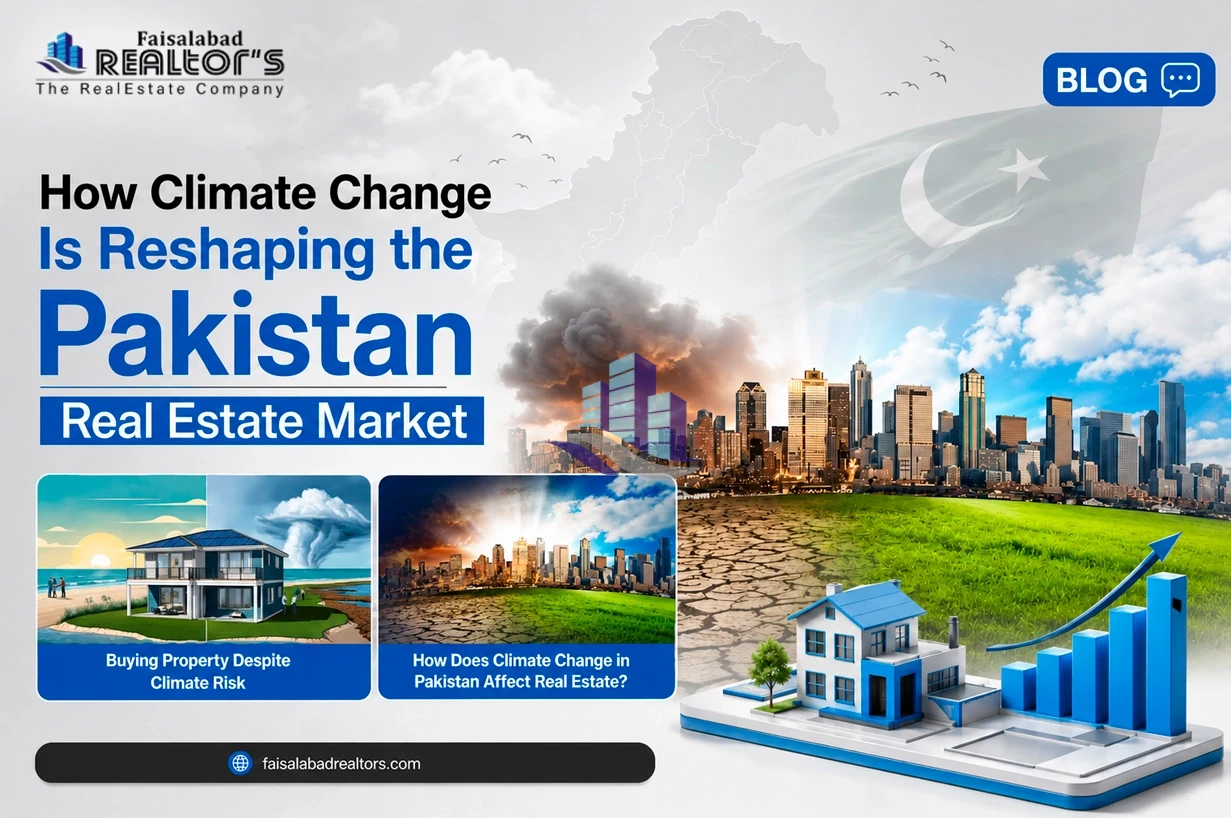
For a long time, climate change felt like something far away, a problem for scientists and the news, not something that touched everyday life. That has changed. It has slowly turned into a money issue, and one of the clearest places you can see this is in property prices. The impact of climate change on real estate is not just a future worry anymore. It is already changing how homes are priced, insured, and sold, and the Pakistan real estate market is a good example of this.
Why Buyers Are Paying More Attention to Climate Risk
In Pakistan, purchasing real estate depends on a few easy factors. How close is it to the main road, the school, or the market? Climate and weather were rarely taken into consideration. That is beginning to shift.
Landslides in Swat and Abbottabad, floods in Peshawar and Rawalpindi, and heatwaves in Lahore and Multan have caused many buyers to reconsider. The damage doesn't end with the repair price when a housing scheme floods. More than once every few years, a hillside location becomes dangerous after a lot of rain. People remember it, and it follows the property into every future resale conversation.
This is really what people mean by property investment climate risks. It is not about one bad flood or one hot summer. It is the slow loss of trust from buyers, rising insurance costs, and investors who now ask more questions before they commit their money.
Where This Pressure Is Showing Up
Cities are becoming hotter day by day. In summer, temperatures in Lahore might exceed 45 degrees. This is exacerbated by the city's highly crowded structures and a lack of open space and trees. As more buyers look for planned, shaded spaces that stay cool throughout the hottest months. We just need older homes without appropriate insulation or shade to become less tempting.
Issues exist in areas close to rivers like the Ravi, the Swat, and the Kabul. Water continues to enter homes farther than before due to melting glaciers and heavy monsoon rains. Once seen to be picturesque and appealing, land near rivers and canals is now losing some of its appeal.
In the hills, cutting down trees along with heavier rainfall has made landslides more common in places like Swat and Mansehra. This is a real concern for tourism projects, since a single bad landslide season can keep both visitors and investors away for years.
Groundwater is dropping too, in cities like Islamabad and Multan, and this quietly makes nearby land less useful and less attractive, especially land that used to be valued for farming.
Then there is smog. Every winter in Lahore and Faisalabad, the air gets thick enough that people plan their lives around it. This is slowly pushing demand away from busy city centers and toward cleaner areas on the outskirts.
None of these problems happen on their own. Together, they are pulling apart two kinds of property, the ones built to last and the ones that were not, and the gap in value between them keeps growing.
What This Means for the Market in 2026
Even with all this, 2026 has brought some hope back to the Pakistan real estate market. Prices are more realistic now compared to the speculative years before, and a more stable economy along with new mortgage support has brought local buyers and overseas Pakistanis back into the market. Regulators have also become stricter about approving new housing societies to protect farmland, and this is expected to shrink the supply of properly developed land in the years ahead.
With land becoming scarcer, location matters more than ever, and being climate resilient is quickly becoming part of what people mean by a good location. More developers are now including solar power, energy efficient design, and rainwater harvesting as standard features in newer projects, and these homes are starting to sell for more than older housing that was never built with any of this in mind. Anyone thinking seriously about real estate investment this year is not just asking what a property is worth today. They want to know if it will still be safe, insurable, and comfortable to live in twenty years from now.
What Buyers and Developers Can Actually Do
They need to raised foundations, improved drainage, and clever cooling design help a property stay livable and valuable for much longer. Look past the view and check the facts. Flood maps, groundwater levels, and drainage records matter just as much as a nice outlook or a good price. A little research before buying can save years of regret later. A plot that looks a little less scenic but sits on stable ground will typically be the smarter buy.
Spread your investments. No matter how promising it appears at the moment, it is rarely a wise idea to put everything into one high-risk sector.
Additionally, pay attention to any new regulations. Staying ahead of Pakistan's increasingly stringent environmental rules safeguards future access to financing as well as resale value.
The Bottom Line
Climate change is slowly changing the rules of property value in Pakistan. Heat, floods, landslides, water shortages, and pollution are no longer minor issues on the side. They are becoming a central part of how buyers judge a property and how investors weigh risk. For anyone serious about real estate investment here, understanding these climate pressures is not optional anymore. It is simply part of making a smart, well informed decision.
If you're interested in any property sale or purchase, do contact us. We provide the best real estate services in Faisalabad.
Contact us for:
House for sale
House for rent
Room for Rent
Flat for Rent
Ideal Farm House
Commercial Avenues